My Top Ten Books of 2013
Happy New Year to all you wonderful book-lovers! You may have noticed a lack of action on my blog recently, and I do apologise. After moving house and changing jobs and adjusting to a new life, I’ve found I now have less time to run my blog as I used to. However, I’m really keen to get it back up and running and post regularly again in the new year. What better way to do it than post my top ten books of last year? I know it’s a little late, and these things usually get posted before the new year starts, but hey! At least it’s up 🙂
So I’ve noticed I’ve read fewer books than last year, in fact I read only 46 books which is unusually low for me. I’ve definitely found a bit of a lull in fiction this year, and haven’t found it too much trouble to compile my top ten compared to previous years. I think because of this, I’ve suddenly taken a bit more of an interest in non-fiction, and so my new years reading resolution is to read five non-fiction books. I never EVER read non-fiction so this will be quite a feat for me! But with no further ado, here are my top ten books of 2013:
10. The Bone Season by Samantha Shannon
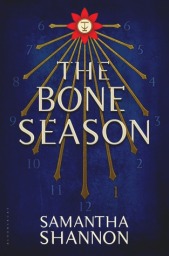 I couldn’t help but include what is probably one of the most talked about debuts of the year – The Bone Season. At the age of just 22, Samantha Shannon has achieved what most of us could only dream of, not only having her book published, but also having the film rights sold to Andy Serkis’s company The Imaginarium Studios. I know there was a lot of hype surrounding this book, set in a futuristic London, and Shannon being the next ‘Harry Potter’ phenomenon, or the next ‘Hunger Games’, but I found this novel to be much more intricately and intelligently written, and much more out-and-out sci-fi than what I could only imagine most readers were expecting. The Bone Season was a huge surprise for me and I’m really excited to see the story to continue.
9. The Round House by Louise Erdrich
I’ve loved Lousie Erdrich’s writing for some time now, and her latest novel is no exception. Winner of the US National Book Award, this powerful novel set on a North Dakota reservation, depicts how one brutal attack throws everyone into a world of chaos and injustice. All seen through the eyes of a thirteen year old boy who must witness his mum become a shell of her former self, and lose the innocence of his childhood behind far too early. There is a lot to be learnt in this novel, and it really sheds a lot of light on some of the ridiculous laws placed on the Native American reservations in the 1980s. But what I loved most of all was Erdrich’s kooky cast of characters who manage to bring a wonderful touch of humour and warmth to a rather bleak storyline.
 8. The Garden of Evening Mists by Tan Twan Eng
I actually listened to this one on audio, which makes it the only audiobook in my top ten, but then again, also my audiobook of the year! Hoorah! Seriously though, this is one stunning piece of writing which, although took me out of my usual comfort zone, I found an absolute pleasure to listen to. It follows one woman who is looking back on her life as the sole survivor of a Japanese POW camp. After losing her sister in the camp, she seeks to create a Japanese garden in memory of her sister who had a profound love for them. Instead, she ends up becoming the apprentice of a local Japanese gardener who she grows to share an intriguing relationship with. I remember being recommended this by someone who said ‘if you love gardening you’ll love this book’ and so I avoided it like the plague. However, I am so very glad I decided to read it after all as it’s really very little about gardens, and what little there is, is utterly fascinating. I loved the exploration of the culture in Malaysia, and the art of Japanese tattooing and all of the characters little back stories that take you further afield. It really is a wonderful, thought-provoking read and I do wish it had won the Man Booker Prize last year!
7. Born Weird by Andrew Kaufman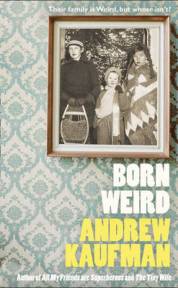
From the author of ‘All My Friends Are Superheroes’ comes this quirky and peculiar little gem. A lot of readers have compared this to a Wes Anderson film, and it’s easy to see why! It follows the fates of five siblings whose grandmother placed a ‘blessing’ on each of them when they were born – for example, one could always win in a fight, one could always forgive instantly, one always has hope and so on. However, these blessings turn out to be more like curses as they grow older. With their grandmother on her deathbed, the siblings must come together and have these curses lifted once and for all. If anything it becomes a rollicking great family road-trip of a novel, one that will make you laugh out loud whilst still holding on to all-important touch of seriousness throughout.
 6. Joyland by Stephen King
I have to say this was probably my biggest surprise of 2013. I’ve read a couple of Stephen King books before, and I’ve usually found them entertaining, but not really much more. I’m not the biggest fan of crime fiction so when I heard King was releasing a book through the imprint ‘Hard Case Crime’ I wasn’t sure I’d go for it. However, ‘Joyland’ completely blew me away and it has to be my favourite thing I’ve read by him yet. It’s a completely unexpected little novel, and it’s not quite what you imagine it to be at all. Set in a small town North-Carolina carnival during the 1970s, it follows a young boy as he takes up a summer job to try and help him get over losing his first love. He soon becomes embroiled in the case of a murdered young girl whose ghost is said to haunt one of the rides. However, Joyland is much more of a coming-of-age tale than anything else. There is so much heart in this novel and King’s writing is simple and effortless, taking you right back to being a teenager in love again. I urge you to read it.
5. Emperor of Thorns by Mark Lawrence
How could I not include the conclusion to one of my favourite new fantasy trilogies? If you’re a regular follower of my blog you probably remember how much I loved ‘Prince of Thorns’ back in 2011, and this was the perfect way to end a superb series. Jorg is still, and will always be, one of my all-time favourite characters! Now begins the wait read the start of Mark’s new trilogy ‘Prince of Fools’ due for release in June!
4. The Ocean at the End of the Lane by Neil Gaiman

I have no doubt this is on a lot of people’s ‘Books of 2013’ lists this year, and it’s certainly no exception here. I still cannot claim to have read everything Neil has written, but this has to be my favourite so far. You can tell from the first pages that this is a much more personal novel for Gaiman, and because of this you, as a reader, are drawn in on a level that makes it personal to you too. It will grab you by the heart and refuse to let go as you follow a young man returning home after forty years; a home full of many dark memories, and a story left to tell. It’s the kind of novel you will want to re-read as soon as you’ve finished it!
3. Dreams and Shadows by C. Robert Cargill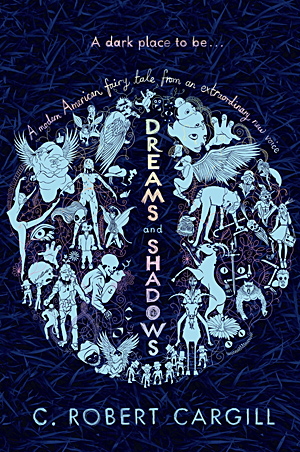
Dreams and Shadows wins best debut adult fantasy novel of the year for me, and possibly even most beautiful cover! I can’t stop raving about this, and if you just so happen to be a Neil Gaiman fan then please look no further than this for your next read. Drawing on all kinds of fairy tales and mythology, it follows two young boys whose destiny’s become entwined together when they both find themselves in the Limestone Kingdom – a parallel universe featuring every kind of magical creature you could possibly think of – from genies and wizards, to redcaps, elves and fairies – it has it all! It’s been a while since I’ve found a new adult fantasy novel to excite me just as much as this one has. I’m incredibly excited for the follow up – ‘Queen of the Dark Things’ due for release in March.
 2. A Tale for the Time Being by Ruth Ozeki
This has to win best adult novel of the year for me, hands down. A Tale for the Time Being is one of those incredibly special books that stays with you long after you’ve read the final pages; it seeps into your every pore and changes you in a way you never saw coming. It follows a woman’s discovery of a diary washed up on the shores of the beach near her home, and her obsession with this young Japanese girl’s voice that calls to her through its pages. It meanders through many different themes and topics from nature, climate change, science, quantum physics, ecology, religion and much much more. In many ways it evoked the very same feelings in me that Life of Pi did, as it forces you to look at the world in which we live in a way you won’t ever forget. A truly special book that deserves to be read, loved and cherished.
1. Heap House by Edward Carey *BOOK OF THE YEAR*
As you can see, for half of the year I had the Man Booker Prize Shortlisted ‘A Tale for the Time Being’ held firmly in my top spot, and then out of nowhere came Heap House which managed to blow everything else out of the water for me. This wonderfully quirky, gothic tale of an eccentric family, who live on top of great big heaps of London rubbish, is certainly more than just a Gormenghast for kids (or the young at heart). It’s uniquely inventive, and wildly imaginative in every conceivable way and Carey’s illustrations make it all the more special. This is by far my favourite book of the year and I can hardly wait for more. And if you don’t believe me, you should see what Man Booker Prize-winner Eleanor Catton says: “delightful, eccentric, heartfelt, surprising, philosophical, everything that a novel for children should be.” She won the Booker Prize, therefore you must listen to her 🙂
The Golem and the Djinni by Helene Wecker
 Chava is a golem, a creature made of clay, brought to life by a disgraced rabbi who dabbles in dark Kabbalistic magic. When her master, the husband who commissioned her, dies at sea on the voyage from Poland, she is unmoored and adrift as the ship arrives in New York in 1899.
Ahmad is a djinni, a being of fire, born in the ancient Syrian desert. Trapped in an old copper flask by a Bedouin wizard centuries ago, he is released accidentally by a tinsmith in a Lower Manhattan shop. Though he is no longer imprisoned, Ahmad is not entirely free – an unbreakable band of iron binds him to the physical world.
The Golem & The Djinni is their magical, unforgettable story; unlikely friends whose tenuous attachment challenges their opposing natures – until the night a terrifying incident drives them back into their separate worlds. But a powerful threat will soon bring Chava and Ahmad together again, challenging their existence and forcing them to make a fateful choice.
As soon as I received a copy of ‘The Golem and the Djinni’ for review, I was immediately excited to read it, particularly as it shared comparisons to ‘The Night Circus’ and ‘Jonathan Strange and Mr Norrell’. However, despite the vast array of five star reviews already cropping up online for this debut novel, I have to admit it failed to captivate me in the same way.
The best way I can describe this novel is that it is without doubt beautifully crafted. Helene Wecker takes her time in slowly setting the scene of immigrant life in New York in the 1800s, and the vast differences between each community; in particular here, the Jewish community, and the Little Syria community. Her descriptions of the people, the food, the smells etc are all wonderfully written and definitely make you feel as though you are right there with them. However, I felt Wecker spent far too much time doing this, and developing her minor characters to a point where the two main characters – the golem and the djinni, often felt a little flat. I actually felt the secondary characters much more rounded, which is a little unusual in a novel!
The golem (a woman made from clay), and the djinni (a male ‘genie’ of sorts), are both increasingly intriguing characters, and I particularly liked the way she slowly develops their relationship (they don’t actually meet each other until half way through the book!). I also liked the way it lost the typical romantic clichés that tend to crop up in novels of this ilk. The golem and the djinni don’t immediately fall in love with each other; there is much more going on, on a much deeper level here. Readers who are expecting a whirlwind, sweeping romance are going to be disappointed. Their relationship is built much more on friendship more than anything else. Although I enjoyed the slow-build of their relationship, I would have liked there to be a little more romance to it!
The last 100 pages or so of the novel are really truly exciting and definitely moved at a faster pace which I would have liked to have seen carried throughout the entire novel, and despite it picking up a little, I still found I didn’t care as much as I would have liked about the lives of these people and the way it would all end for each of them.
Despite the fact that I didn’t love this novel, I still wouldn’t hesitate to recommend it to people who like this sort of thing, as long as they don’t mind a slower pace. I can see that lots of other readers really loved this novel, and so I wouldn’t want to put people off solely with my opinion. It is still a beautifully crafted book, the descriptions are lovely, and the ideas are fresh and original, but I would have liked a faster pace, a little more romance, and a lot more magic!
The Golem and the Djinni is out on 15th August. A big thank you goes to HarperCollins for providing me with a copy for review.
Rating 
Z: A Novel of Zelda Fitzgerald by Therese Anne Fowler
 Before F. Scott Fitzgerald was a literary darling, before he’d even begun to imagine The Great Gatsby or Benjamin Button, he was a young WWI army lieutenant who fell hard for a spirited Southern belle named Zelda Sayre. The life he and Zelda would lead together in New York, Long Island, Paris, Hollywood and the French Riviera made them legends, even in their own time. Set amidst the glamour of the Jazz Age and The Lost Generation’s vivid world abroad, Z vividly brings Zelda and Scott’s romantic, tumultuous, extraordinary journey to life.
With Gatsby fever very much infecting the nation right now, I couldn’t wait to start reading ‘Z’, a brand new novel detailing the lives of Zelda and Scott Fitzgerald. It is very much reminiscent of Paula McLain’s ‘The Paris Wife’ which I read some time ago and absolutely fell in love with, and follows Ernest Hemingway’s first marriage to Hadley Richardson. All of these people feature in both novels and it’s really interesting to get two different sides to their stories. Clearly Paris was definitely the place to be for writers and artists of all kinds in the 1920s, and both novels will make you want to do nothing more than jump back in time and go to a party until the wee hours of the morning, sipping cocktails and dancing away with these fascinating people.
The thing about ‘Z’ is that you go into it desperate to see the man behind ‘The Great Gatsby’, to see just who F. Scott Fitzgerald was, where he came from, how he found his ideas, and what his peers thought of him at the time. But actually, what you end up discovering is that Zelda herself makes for a very fascinating person in her own right, and I almost found myself more interested in her life at times. To watch this small town girl invest so much of her heart, dreams, and time in this one man who she married much to the disapproval of her entire family, is just incredible. You would expect the wife of Fitzgerald to live very much in his shadow, which I’m sure if he had his way, that’s exactly how it would be. But Zelda is full to the brim with personality and sass and she knows that she wants to make something of herself without Scott. I was very surprised to learn that Zelda wrote and published many short stories of her own, under Scott’s name, due to pressure from both him and their publisher. In truth, the ones she did publish under her own name didn’t receive much critical acclaim, but they were still something of her own out there in the world. Zelda goes down all sorts of paths, from ballet and acting, to painting and writing, but she never quite achieves the success she dreams of.
Most people, who know anything of Zelda, know that she ended up being diagnosed with schizophrenia and admitted into a sanatorium, and I expected the novel to focus much more on this than it did. In some ways I’m glad it didn’t. I think it’s easy to form an impression of someone based on that kind of information, but the author here has focused on the real Zelda, and that is a side of her I’d love for everyone to discover.
It’s impossible not to make comparisons between ‘Z’ and ‘The Paris Wife’, and I have to say I think Paula McLain’s ability to get inside the mind of Hadley Richardson and her marriage to Hemingway was much more powerful than the narrative style in ‘Z’. I felt certain aspects were rushed, and I feel like I would have loved a slightly deeper insight into their marriage. A lot of the passages focus on the parties and other writers and artists that they met in Paris, which of course is fascinating, but sometimes feels a little bit like name-dropping for the sake of it. I would have loved the opportunity to delve into Zelda’s mind, particularly towards the later years of her life. I also felt that it was a shame the novel ended with Scott’s death, making it feel like Zelda’s life was nothing afterwards, even though she lived for a further eight years.
However, this is a fascinating novel to read and one which gives you a truly fascinating and exciting glimpse into what it was like to be alive in the 1920s Jazz Age, and most importantly, what it was like to be married to F. Scott Fitzgerald! It’s easy to see how Zelda became a feminist icon; putting up with Scott, his alcoholism and his old fashioned ideals, was no easy feat. But underneath it all, was undoubtedly a raw and honest love for each other that neither one could escape. I would definitely recommend this novel to anyone, whether you’ve read Fitzgerald or not it doesn’t matter; it’s just a fascinating time full of fascinating people!
‘Z’ is published by Two Roads, and is available now.
Rating 
The Round House by Louise Erdrich
 One Sunday in 1988, thirteen-year-old Joe Coutts learns that his mother has been the victim of a brutal attack by a man on their North Dakota reservation. Joe’s mother is traumatized and afraid. She takes to her bed, and refuses to talk to anyone – including the police; meanwhile his father, a tribal judge, endeavours to wrest justice from a situation that defies his keenest efforts; and young Joe’s moral and emotional landscape shifts on its child’s axis. Frustrated, confused and nursing a complicated fury, Joe sets out with his best friends Cappy, Zack and Angus in search of answers that might put his mother’s attacker behind bars – and set his family’s world straight again. Or so he hopes.
Anyone that knows me will know I have quite a fascination with the Native American culture, and after reading Louise Erdrich’s Love Medicine some years ago back when I was at university, I literally jumped at the chance to read and review her latest award-winning offering, The Round House.
If you haven’t read Erdrich before then you are definitely in for a treat. She certainly hasn’t won numerous awards for nothing. She is one of those writers whose language is full of symbols and a deeper meaning, and she gets to the heart of her characters in a way I rarely see these days. Louise is an enrolled member of the Turtle Mountain Band of Chippewa Indians, and her novels focus on the cultural identity of Native Americans, both in the past and in the present day.
Although I can safely say The Round House as a whole is a fantastic novel, the first fifty pages or so are especially harrowing and unforgettable. To watch Joe come to terms with his mother being so violently attacked and become a shell of her former self is really poignantly depicted. There were moments when I was right there with him, and feeling a loss of someone he will never know again, because after an attack like that, how can you ever be the person you were before? You get to witness Joe’s last days as a blissfully ignorant child, enjoying life the way every child should, to suddenly having to deal with this cataclysmic event that will forever change all their lives. It is really is all down to Louise’s ability to be able to get inside the minds of her characters, and bring alive their thoughts and emotions in such a delicate way that makes this novel something special.
Of course what seems worst of all within this story, is what Erdrich is bringing to every reader’s attention. We know that the attack happened on the land surrounding the ceremonial Round House, but because parts of the area belongs to state, federal and native territories, each with their own laws, it is impossible to prosecute anyone for the attack. In the author’s note at the end, Erdrich tells us that one in three Native American women will report being raped, and 86% of those will be by non-Native men because they think they can get away with it. It seems incredibly important for Erdrich to bring this to light to so many readers out there. But what these ridiculous laws mean is that people will take it into their own hands, and who are we to blame them? I certainly didn’t blame Joe…
The Round House is an incredible novel and I know that not everyone is as interested in the Native American culture as I am, but I would seriously urge you all to read it. Despite the harrowing subject matter, there is still a lot of joy and warmth to be seen within its cast of often wacky characters, and a lot of moments where I found myself laughing out loud. The Round House won this year’s National Book Award, and for me, it’s easy to see why. Louise Erdrich is a truly gifted writer and I literally can’t wait to read more of her work.
The Round House is published by Corsair, and is out now. A massive thank you goes to the publisher for sending me a beautiful finished copy for review!
Rating
The return from an unplanned blogging break!

So I’m finally getting back into blogging after a 3 month hiatus! I apologise for the lack of warning for this and for neglecting you all! However, I thought I’d just give you a quick update of what’s been happening, and the reasons for this blogging break. I have recently moved and changed jobs! I’ve finally made the move from Cheltenham to Bath, after a year of saying how I’d love to live there. I also now work for my favourite independent book shop – Mr B’s Emporium of Reading Delights, a place I’ve loved visiting for the last couple of years! So as brilliant as it all is, it has been quite the upheaval and finding the time to blog whilst adjusting to this new life has been a little difficult, but I’m finally back! I only hope you haven’t all forgotten me already 🙂
I have lots of great reviews coming up, including The Round House by Louise Erdrich, Dark Eden by Chris Beckett, and I’m just about to finish Joyland by Stephen King. Please do leave comments and update me with the rest of you have been reading and enjoying lately! I feel slightly out of the blogging loop. And if you’re a Bath-based blogger in particular, let me know! 🙂
Dreams and Shadows by C. Robert Cargill
 This brilliantly crafted narrative – part Neil Gaiman, part Guillermo Del Torro, part William Burroughs – follows the boys from their star-crossed adolescences to their haunted adulthoods. Cargill’s tour-de-force takes us inside the Limestone Kingdom, a parallel universe where whisky swilling genies and foul mouthed wizards argue over the state of the metaphysical realm. Having left the spirit world and returned to the human world, Ewan and Colby discover that the creatures from this previous life have not forgotten them, and that fate can never be sidestepped.
If you follow my blog at all then you probably already know I am always taken in by a beautiful book cover, and Dreams and Shadows is no exception here. Featuring all kinds of mythical creatures and oddities, I knew this would be a book for me, and I certainly wasn’t wrong!
In all fairness, it did take me a little while to get into this book, mainly because from the opening pages you are introduced to a number of different mythical creatures that I had never heard of, and found a little hard to imagine. At first the chapters alternate between the story, and excerpts from a book about fairies and all their folklore, which I found a little jarring at times, and I’m still not sure if these excerpts were completely necessary or essential to the story as a whole. It soon interrupts the flow and pace of the story, but if you can hang on and persevere, these excerpts do come to an end, and you will find yourself fully immersed in this stunning world Cargill has created.
A lot of reviewers have been likening Cargill to Neil Gaiman, and yes I can see where they’re coming from, and I wouldn’t hesitate in recommending this book to Gaiman fans, but I do think it’s important to say that Cargill has definitely made this novel his own, and has his own distinctive style and voice. I absolutely loved all the different types of fairies explored here, and the way they’re depicted in their truer colours – as not particularly nice beings most of the time. Cargill introduces you to the likes of the redcaps, (small fairies who must kill in order to keep their hats red and wet with blood to give them energy or they will die) nixies (water spirits ready to drown you in an instant) the Leanan Sidhe (beautiful women who take humans as lovers), and of course the almost faithful djinn (otherwise known as a genie). This is just a taster of what’s explored throughout, and you can see just how creative Cargill has been here.
You may think a novel about fairies would be pretty tame in the grand scheme of things, but make no mistake, Cargill does not hold back on his violence here. There are some rather gruesome scenes when creatures from hell come to play, making this definitely not a story for the faint of heart, or younger readers. This is not your average bed time fairy tale.
I’m really impressed with Cargill’s debut novel, and I literally can’t wait for its release so I can get recommending it to people. Dreams and Shadows surprised me in every way, and although the story leaves you satisfied with an ending, there is definitely a not-so-subtle hint that there is more to come from some of these characters, and I’m really excited to see what Cargill will write next!
Dreams and Shadows is released on 28th February, published by Gollancz. A big thank you goes to the publisher for providing me with an early review copy.
Rating
The Twelve Tribes of Hattie by Ayana Mathis
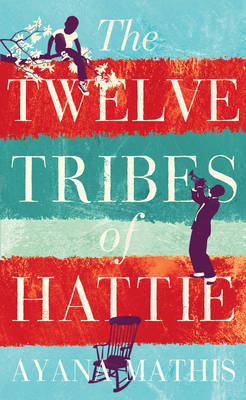 Fifteen years old and blazing with the hope of a better life, Hattie Shepherd fled the horror of the American South on a dawn train bound for Philadelphia.
Hattie’s is a tale of strength, of resilience and heartbreak that spans six decades. Her American dream is shattered time and again: a husband who lies and cheats and nine children raised in a cramped little house that was only ever supposed to be temporary.
She keeps the children alive with sheer will and not an ounce of the affection they crave. She knows they don’t think her a kind woman – but how could they understand that all the love she had was used up in feeding them and clothing them.
How do you prepare your children for a world you know is cruel?
You may have heard of The Twelve Tribes of Hattie already, what with the rave reviews its already garnered from various journalists and writers, and I can honestly say; quite deservedly so. I can’t say I normally listen out for Oprah Winfrey’s book recommendations, but if this novel is anything to go by, I may have to start paying a little more attention.
What struck me from the very first page is the wonderful quality of writing that shines through an otherwise heart-breaking story. For a debut novelist, Ayana Mathis couldn’t have done more to grab my attention with the way she artistically weaves her words together to create sentences that resonate all the way through you. I found myself reading the novel rather slowly, just savouring each word and taking it all in, not letting anything slip through my concentration, and it’s not often I find a book that I can do this with.
I was almost surprised to find some rather negative reviews online, particularly regarding the narrative style of the book. Each chapter is told from the point of view of a different child of Hattie’s each time, and in a different year. In fact the whole novel spans from 1925 to 1980, and I thought this gave you not only a great glimpse into the whole of Hattie’s family, but also into how America changes throughout those years. However, other reads seem to have found it a rather disjointed narrative, meaning you get little of Hattie’s character as you would have liked. For me, each child took me back to Hattie and the hardships life dealt her. Everyone is connected and for me this style was a wonderful way to see how each child becomes their own person in a very large family, and how Hattie loves each one of them differently, but no less. The novel deals with everything from love, death, racial conflict, homosexuality, suicide and alcoholism, and it’s easy to see how decisions early in life can still make their presence known generations down the line.
If I could criticise this novel in any way it would only be to say that I felt the last few chapters, set in 80s America, felt a little less meaningful than the rest of the novel. They were still well written, but not quite up to the high standards presented earlier in the book.
I really adored this book. It was everything I wanted it to be and more. I would definitely recommend it to anyone looking for a new literary voice in their lives, and for a beautifully written story with more heart than anything I’ve read in a long time. Trust me when I say Ayana Mathis is definitely an author to look out for.
The Twelve Tribes of Hattie is out now, published by Hutchinson. A massive thank you goes to the publisher for providing me with a copy for review.
Rating
Related articles
- The Twelve Tribes of Hattie by Ayana Mathis: review (telegraph.co.uk)
- The Twelve Tribes of Hattie by Ayana Mathis – review (guardian.co.uk)
The Investigation by Philippe Claudel
 The Investigator is despatched to a provincial town to investigate a disturbing spate of suicides amongst the employees of The Firm. But from the moment he steps off the train, he finds that everything is against him, from the hostile weather to the town’s bewildering inhabitants. Cold, hungry and humiliated, always one step behind, he finds himself in a recurring nightmare that waking cannot break. And yet his resolve never falters: he remains determined to find the only man he can hold to account – The Firm’s legendary but elusive founder.
I became a big fan of French writer Philippe Claudel back in 2010 after reading the wonderful Monsieur Linh and His Child. The first thing that struck me about his latest novel, The Investigation, was how incredibly different it sounded to his previous work, but also how deliciously intriguing it appeared to be, and I can now safely say that my first thoughts definitely did not deceive…
This is a rather difficult novel to review in some aspects, because despite how inconceivably brilliant it was, I still can’t really tell you what the hell actually happened. All we know is that a man who calls himself the investigator turns up to an unnamed town to investigate a number of suicides that occur amongst the employees of a place known as The Firm. At first he has a slightly hard time even getting to The Firm as everything you could possibly imagine getting in his way, did, and I mean from the plausible to the downright ridiculous. In fact, some of it is a little laugh-out-loud funny. But it never feels so ridiculous that you feel like you should stop reading. In fact, Claudel’s masterful writing pulls you in and leaves you dangling on a thread, tempting you with the answer to what’s really going on here, and you’re left turning page after page; desperate to get there. I’m not going to tell you how it all comes to an end, because frankly the journey there is what makes this novel so unique in a way I’ve never encountered before. Everything the investigator encounters may seem ridiculous at first, but once you delve deeper, you soon realise that everything you thought about this book may be wrong. Who is the investigator? Who is The Firm? It’s not long before the investigator begins to doubt his whole existence, and you’re right there with him experiencing it in the most unsettling fashion.
The Investigation is a dark, haunted, twisted novel that will intrigue you perhaps more than any other novel you read this year. It will make you think about the world and everyone around you in a whole new light, and if you’re anything like me, you’ll be left gasping after the last page just trying to figure out what it is you’ve just read. Of course, if you’re a lot smarter I’m sure you’ll have some intelligent well-thought-out answer ready to hand. I would love to see this as a film one day, one of those low-budget indie films that can really examine the depths of this deceptively simple story. If you love a book that makes you feel unsettled to your very core and leaves you with more questions than answers then this is definitely a book for you, and one I’d highly recommend.
The Investigation is out now, published by MacLehose Press, an imprint of Quercus. A big thank you goes to the publisher for providing me with a copy for review.
Rating
Related articles
- The Investigation by Philippe Claudel: review (telegraph.co.uk)
The Explorer by James Smythe
 When journalist Cormac Easton is selected to document the first manned mission into deep space, he dreams of securing his place in history as one of humanity’s great explorers.
But in space, nothing goes according to plan.
The crew wake from hypersleep to discover their captain dead in his allegedly fail-proof safety pod. They mourn, and Cormac sends a beautifully written eulogy back to Earth. The word from ground control is unequivocal: no matter what happens, the mission must continue.
But as the body count begins to rise, Cormac finds himself alone and spiralling towards his own inevitable death … unless he can do something to stop it.
Despite trying and failing to read James Smythe’s previous novel, The Testimony, last year, I still really wanted to read The Explorer as soon as I heard about it. Space has always been a subject that fascinates me so I couldn’t say no to reviewing it, and for the most part, I’m glad I didn’t.
I started off somewhat hesitant, unsure as to whether or not I’d like it considering I didn’t get on so well with The Testimony, but what I remember most about that book is that despite all the reasons that I found for not finishing it, I can still respect James as a writer with some truly intriguing ideas. The Explorer is certainly no exception here. If there’s one thing it excels in, it’s within James’s ideas.
The idea of a space mission gone wrong isn’t exactly original, and you may even read the blurb and expect something of the sort, but nothing could possibly prepare you for the bizarre twists it takes along the way. I can’t say too much for fear of ruining it for potential readers, but it does leave you in slight awe for how even James could get his head around his own ideas, let alone us readers. You know from the blurb that this journalist, Cormac, embarks on a space mission with a crew of astronauts who one by one, begin to die. But James is exceedingly clever here, his twist allows him to explore the circumstances of each death in a way I’ve never seen done before. It’s an unsettling and claustrophobic read but you will get to a point where it becomes so intense that you can’t quite put it down. The feeling of loneliness, and complete and utter hopelessness pervades every scene in the book, and I ended up feeling terrified for this little band of people, and in particular, Cormac, who willingly embark on this journey to realise their dreams, to become nothing short of unforgettable. Sadly, they have little idea as to what awaits them, and the fact that you as a reader know this, is almost unbearable.
But despite all the wonderful ideas and themes explored, it’s not without its flaws. To begin with I started to remember what it was I didn’t like so much about The Testimony. The style of writing often feels very journalistic in a way that becomes a little irritating within a novel. Now obviously the story does revolve around a journalist, so I tried to see past it, but there really is something about his style that doesn’t quite agree with me. Like The Testimony there is also a tremendous amount of repetition that had me skim-reading for a few pages here and there just trying to get to the good stuff. There was an awful lot of flashbacks to Cormac’s past involving his wife, and I grew really, really tired of these, and felt there were far too many of them. I can understand that the story needed fleshing out a little, but I would have liked to have seen a little more space exploration rather than character exploration.
A fellow blogger told me that the ending blew him away, and I suddenly became very excited to see where this bizarre story would end and what Cormac’s fate would ultimately be. Sadly I felt nothing but frustrated by the ending, and wondered what I’d missed. I even re-read the last page just to be sure. There is a definite lack of answers and I couldn’t help but feel slightly short-changed.
Having got over most of the frustration, I am now able to look back on The Explorer and think of it as a gripping read with some great, yet bizarre ideas, that worked for the most part but failed in others. I would have even rated this four out of five if it wasn’t for the really frustrating ending. In a strange sort of way, James excites me as an author and there’s no doubt that his ideas intrigue me. I feel like he could write something really ground-breaking one day, but I have yet to say I’ve read anything of his that I’ve really enjoyed. Almost, but not quite.
The Explorer is out now, published by Harper Voyager. A big thank you goes to the publisher for providing me with a review copy.
Rating
Related articles
- The Explorer by James Smythe – review (guardian.co.uk)
- Outside Space and Time: The Explorer by James Smythe (tor.com)
Wool by Hugh Howey
 In a ruined and hostile landscape, in a future few have been unlucky enough to survive, a community exists in a giant underground silo.
Inside, men and women live an enclosed life full of rules and regulations, of secrets and lies.
To live, you must follow the rules. But some don’t. These are the dangerous ones; these are the people who dare to hope and dream, and who infect others with their optimism.
Their punishment is simple and deadly. They are allowed outside.
Jules is one of these people. She may well be the last.
You may have heard of Wool already, with it already being touted as the next self-publishing phenomenon following Fifty Shades of Grey, with some articles even questioning whether science fiction is the new erotica. Wool was in fact originally self-published by Howey as a short story back in 2011, but due to its popularity he soon expanded it into a story of five parts, now published for the first time as one volume. As soon as I read the synopsis of Wool and saw its beautiful new cover, I knew this was a book for me.
With one of my colleagues absolutely loving it, and another failing to finish it, I was slightly anxious to begin and see where my own opinion would lie, and as is typical of me, I fell somewhere in between. I found Howey’s ideas of people living as a community in an underground silo, unable to go out into the deadly atmosphere of the world, really intriguing. This is where self-publishing often triumphs; and without such a tool we, as readers, would fail to come across some really great ideas, but without the help of the crucial editor, the writing can often fail to deliver those ideas in a way that lives up to its potential. I think this is probably what has happened here. Howey’s writing isn’t awful by all means, at times it’s very good, but there are a lot of pacing issues and I can’t help but feel that this novel seems like more of a character study than a sci-fi epic. The world needed developing as much as its characters, and unfortunately it never quite got there for me.
The other issue is of course that you can’t help but see it as a short story turned novel. The first ‘part’ feels like a very tight and concisely written story, and the following parts feel like they have a fair bit of padding that slows the pace right down.
Now I don’t mean to put a complete downer on this debut. All issues aside, it is a very entertaining read that had me turning page after page, desperate to find out what would happn next, who would survive and who would die. Like I said, there are some really intriguing ideas here, and perhaps the most important of all is why they are in an underground silo in the first place. I’m not going to ruin it for you of course, but I do love the way Howey slowly teases you with the answers. Lots of other reviewers have questioned the believability of it all, whether certain things would make scientific sense or not, but quite frankly I never care much for these sorts of questions. If the author can make a piece of fiction plausible, then I’m willing to believe it, and I could certainly believe in the world Howey has created here.
If apocalyptic sci-fi is your thing, and you’re looking for an entertaining read that will take you on a journey with some great characters then please do read Wool. The ideas are brilliant, but the execution could’ve used an extra helping hand. Everything is there on the page to make this a truly great sci-fi novel, I just can’t help but wish the editor took it into their own hands and gave it the make-over it needs. Nevertheless, I look forward to seeing what Hugh Howey comes out with next.
Wool is out on the 17th January, published by Century. A big thank you goes to the publisher for providing me with a copy for review.
Rating
Related articles
- Wool by Hugh Howey – review (guardian.co.uk)



 Book Monkey